The only person who understands it is selling it
He has answered every objection, he has a reference customer, and he is the only one in the room who knows how the thing actually works. That is not a fair fight.
Software and AI for service businesses
You call your lawyer about legal questions and your accountant about tax questions. Who do you call about software and AI? Most owners end up asking the person selling it to them. I am who you call instead. And unlike your lawyer, when the answer turns out to be that something has to get built, or that your people need showing how to use these tools, I can go and do it. The first call is free and I use it to learn your business. After that it is $500 an hour, whichever of those it turns out to be, and nobody pays me except you.
Call me when somebody has quoted you for software and you want a read from a person who does not get paid if you buy. When you need to know whether the AI part of a pitch is real. When nobody is selling you anything and you just want to know whether AI would help with a job you do every day. Or when you already bought one, it is not doing what he said it would, and the renewal is coming.
Nobody pays me except you. No referral fees, no reseller margin, no commission from a vendor.
The first call is free. The meter starts when you call me with a real question.
Why owners call
None of these need a project. They need somebody to pick up the phone who has built this kind of software and has nothing to gain from your answer.
He has answered every objection, he has a reference customer, and he is the only one in the room who knows how the thing actually works. That is not a fair fight.
Your CRM, your dispatch software, your document system. Most do more than you use. The feature in the quote may be a setting nobody turned on.
Everything has AI in the brochure now. Some of it works, most of it is dressed-up software you could buy for a tenth of the price, and some of it will quietly make your people slower.
A rollout that ate a budget and changed nothing, or a consultant who produced a deck and left. You want one phone call before you do that again.
How it works
A number to call about software and AI, and the same number when it turns out something has to be built.
Free, thirty minutes, and it is not advice. The form asks three things: what the business does, how many people, and what is on your desk right now: a quote you are looking at, a system somebody wants to replace, or just something you have been wondering about. I spend it learning what you run and who does what, so that when you call in eight months I am not starting with twenty minutes of background.
I tell you what is worth calling me about and what is not. Then you have my cell, and the terms in writing.
My hours are 8am to 5pm Pacific, weekdays. If you are in New York that is 11am to 8pm. If the phone rings in those hours and I am free, I pick up. Sometimes I am already on a call, and outside those hours I am not going to promise to answer a phone I am asleep next to. What I do promise is a call back the same business day. And if it is genuinely urgent and your morning starts before mine, text me before my hours and I will call you as soon as I am up. That is not a promise about every call, it is a promise about the ones that cannot wait.
I say the time and the number out loud before we hang up, and the card gets charged that day. Then a few lines in writing, same day, at no charge: what you asked, what I told you, what to do next. If part of the answer is that somebody in your office has to go and switch something on, the note says what to switch on, where to find it, what order to do it in, and what to check afterwards. It goes to them as well as to you.
Nobody pays me except you. No referral fees, no reseller margin, no commission from a vendor.
What to call about
The contract one comes up most.
Should I be using AI for this. My competitor says he automated his intake, is that real. My office manager wants a new system, do we actually need one. Or nobody is selling you anything at all and you read something about AI and want to know what it comes to for a business like yours. You ask, I answer. Some of these take five minutes.
Send me the proposal, the contract, the statement of work. I read it and tell you on the phone what it actually commits you to, what is missing from it, and which parts you are already paying for somewhere else.
ChatGPT, Claude, Gemini, whichever one. I sit with the people who do the work and show them what it is genuinely good at for their job and what it will get wrong. Often that is the cheaper answer than buying anything, because you are probably already paying for one of these and nobody is using it.
I join the demo with you and ask the things you do not know to ask. Booked in advance rather than on the spot, because I need to read up first.
Examples by industry
Each page walks through what usually gets sold to a business like yours and which calls stay with your senior or licensed people. Examples, not client results.
Chasing, sorting, and keying client documents is what eats your season. Somebody will sell you software for it.
See where I'd start Regional law firmsOpening a new matter burns hours nobody bills.
See where I'd start Independent insurance agenciesThe shared service inbox floods your team every morning. I check whether the agency system you already pay for handles it.
See where I'd start Residential property management companiesWork orders come in all day and someone has to route every one.
See where I'd start HVAC and plumbing companiesTaking the call, getting it on the schedule, and getting paperwork back clean enough to bill, all day, across every crew.
See where I'd start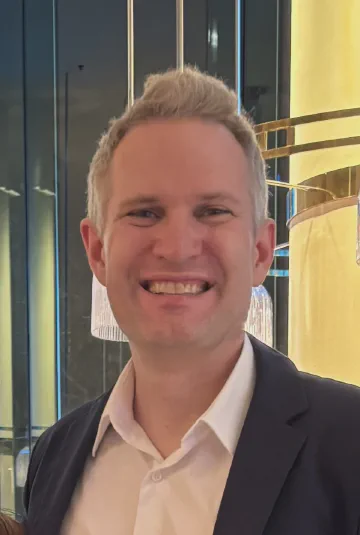
Who you are calling
I'm John Kelly. At Apple I spent four years automating hundreds of thousands of computers, and I have been building with AI since 2013, well before the current noise. At Chime, an online bank, I was the most senior engineer on a product called MyPay, from the first line of code through launch. It lets people draw part of their pay before payday. Chime reported that it is now doing $400 million a year.
Most of that career was being handed a vague idea and turning it into something that runs every day without falling over. Which is most of what you need on the phone: whether the thing in the quote will survive a Monday morning.
I don't resell software and I don't take referral fees. If the answer is "you already own this, go turn it on," that is what you get.
Start here
The first call is free and takes thirty minutes. I use it to learn what you run and who does what, so the paid calls are short. I am not selling you anything on it, because there is nothing to sell you yet.
Already bought one and it is not doing what he said it would? That is a call too.
Book the free first call